When you think of kids asking the same question over and over again and needing you to complete any small task, most of us would think of very young students, such as kindergartners. But those of us who teach middle school know that this somehow continues even as students are older and should have more independence. Many middle school teachers feel that their students should be able to do more on their own and take charge of their own learning, but they have not been expected to. In the process, they have developed bad habits that are difficult to break. Read here for tips on teacher expectations for improving student accountability.

Why We Need to Encourage Student Accountability at the Middle School Level
I think this part goes without saying. We are not doing kids any good by doing too much for them. If we don’t start really looking at this issue (and I do believe it is becoming a huge issue), there are 4 areas that I believe will become areas of concern:
- Apathy: Think about it…if someone is doing too much for you, you never really have to be fully vested in the process. That makes it harder to gain an interest.
- Difficulty Progressing: As a 6th-grade teacher, my kids come from the K-5 school. It is very difficult for them to progress/adjust to the middle school level because there are not systems in place to require them to be independent.
- Lack of Confidence: Many parents know that when kids are very little, they need to sleep in their own beds. Aside from the parent getting enough sleep, it is important for the young child to develop enough confidence in themselves to know that they can manage through the night. The same holds true in the middle school classroom. If we keep doing too much for kids, they are not going to have any faith in themselves to complete tasks on their own.
- Teacher Burnout: I know this is about the kids…but when teachers burn out, it is not good for the kids. When we are constantly having to redirect and do things for kids that they themselves should be able to do, it is exhausting. And the person reading this is most likely a teacher…so I know I don’t have to say too much to convince you of this!
What’s the Problem with Student Accountability?
I could literally write a book on this. I have been a teacher for over three decades, and I have seen a tremendous decline in student independence over the years. It is easy to point the finger at parents, saying they coddle/spoil their kids. We can blame the schools, saying that schools do nothing to help them. We also blame the kids, saying that they are lazy or indifferent.
I don’t subscribe to any of those thoughts. I believe it is due to a huge shift in the societal philosophy that comes with our age of technology. We hear it all the time…stories about how things used to be and how they were better. I’ll give you an example at the risk of sounding cliché. As a child, I went out to play in the summer. I was out the whole day. There were no cell phones. My mom couldn’t track me, she couldn’t call me, she couldn’t text me. I came home at dinner or when I needed a snack. I had to be independent.
I’m not saying that this is better or worse, I’m just saying it is. But we need to do something because our kids deserve to feel independent and confident in themselves. And on a school level, teachers are burning out. They are chasing kids around endlessly because that is what the job seems to require. It is simply not sustainable.
What’s the Solution?
If I could completely solve this, I would be a millionaire. This problem is beyond the scope of a single teacher. I can’t solve it, but I can offer some suggestions to get your middle schoolers to be more independent in the classroom.
Number 1: Start Now to Encourage Student Accountability in Middle Schoolers
As you read this, it might be the beginning of the year. It might be the middle or the end. It doesn’t matter. Start now. Stop telling kids what to do and hand the responsibility over to them. Don’t remind them several times about every little thing (“Don’t forget your books!” “Remember to bring in your permission slips!”). Let them make the mistake and pay the consequences. If they forget their class trip permission slip, they don’t go. And put a few of the following ideas into place NOW, not next year.
Number 2: Create Classroom Systems to Encourage Student Accountability
As teachers, we live and breathe classroom systems. For example, when kids are absent from my class, they are supposed to check Google Classroom for assignments and check the “absent” basket for any papers that they missed. It’s the perfect system and it encourages independence.
But kids constantly come up to me and ask what they’ve missed. And I give into them, every single time. I get their work from the basket. I open Google Classroom and go over it. What I need to do is set up these systems and stick to them.
Think about your systems. I know you have them. You just need to enforce them.
Number 3: Actually Teach Student Accountability
I know a lot of teachers will think this sounds silly, but I believe you have to explicitly teach independence, much in the same way you teach any lesson. Explain your systems thoroughly. I have made slideshows about what to do when you are absent, and I attach that slideshow to their Google Classroom. I might start the morning with a scenario (example: you didn’t write down your homework…now what do you do?).
When you go over an assignment, tell kids you are not answering questions when the answer can be clearly found. Stop the class when needed and backtrack on any issues that you see appearing and reappearing. Make time to discuss what works. Teaching independence is truly a process…it won’t happen right away or by accident.
Need help? Grab my free resource on setting classroom expectations. It is an editable slideshow so that you can be clear from the very start. You can also easily attach it to your Google Classroom or digital learning platform.

Number 4: Have Resources at the Ready
I am a firm believer in giving kids resources to use in your classroom. For example, as a language arts teacher, I am constantly reviewing how to do things like cite text evidence properly, which parts of a title to capitalize, etc. I waste time going over it again and again, and I waste even more time correcting it and asking kids to fix it.
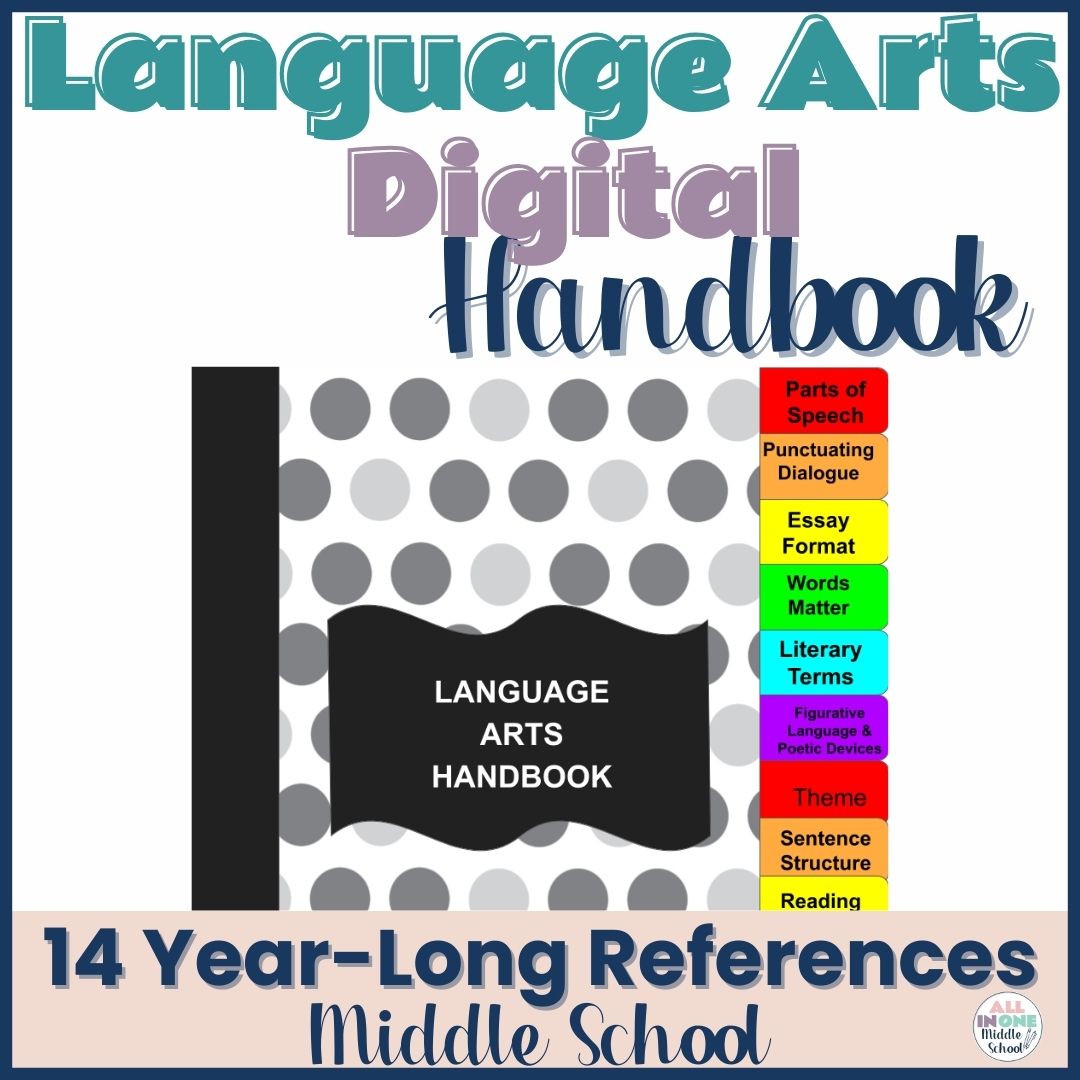
Solution: I created a language arts handbook that can be attached to their Google Classroom for the year. When they ask me, for example, what a noun is, I can refer them back to the handbook.
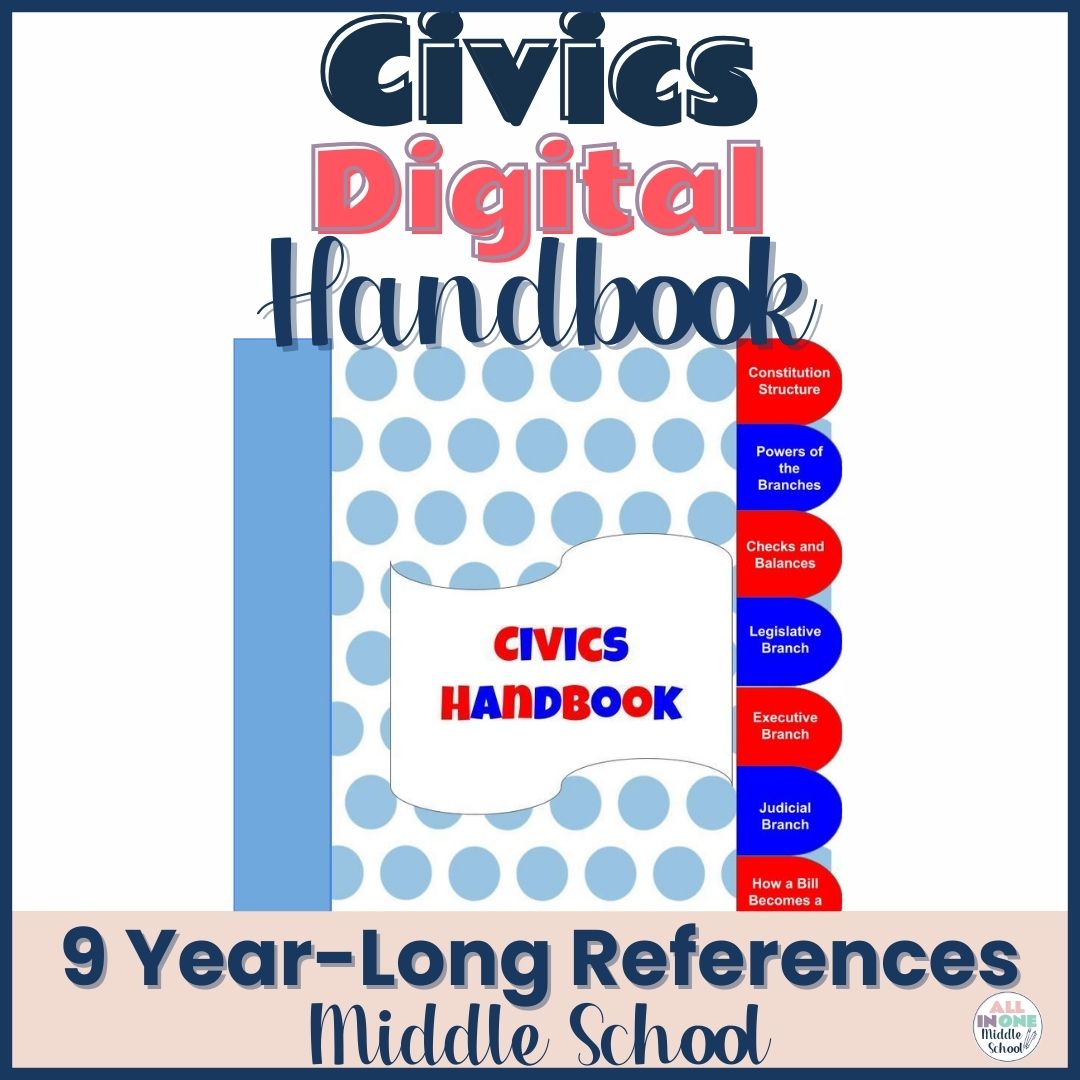
I’ve created something similar for social studies…it’s a civics handbook. It contains topics that kids generally need to reference, such as the branches of government and the electoral college. When kids need reminders, they are to look there, not to me.
I highly recommend giving kids some kind of handbook for whatever subject you teach. If you teach language arts or social studies, they are available for purchase on my TPT store:
Number 5: Be Firm (But Gentle)
We can’t solve this entire issue…we can only change what we do in our classroom. Teach your systems, and then don’t give in when the information is available to them. When issues arise such as kids forgetting to bring their books, don’t allow them to go back to their lockers.
I feel like this is sometimes more painful for me than for the kids; as teachers, we naturally want to help them in any way. So rather than, for example, having them go back to their lockers, I ask what system they can put in place for themselves to remember to do this tomorrow. I tell them that I understand and that the world won’t come to an end if they are unprepared one day. But I have truly begun to realize that we are helping them more by “drawing the line” and giving them the gift of independence and responsibility.
Best of luck to you and your students! If you have questions/comments/suggestions, please be sure to comment below.
-Linda A. “All in One Middle School“
Helpful Links
Join the All in One Middle School Membership!